
- July 16, 2026
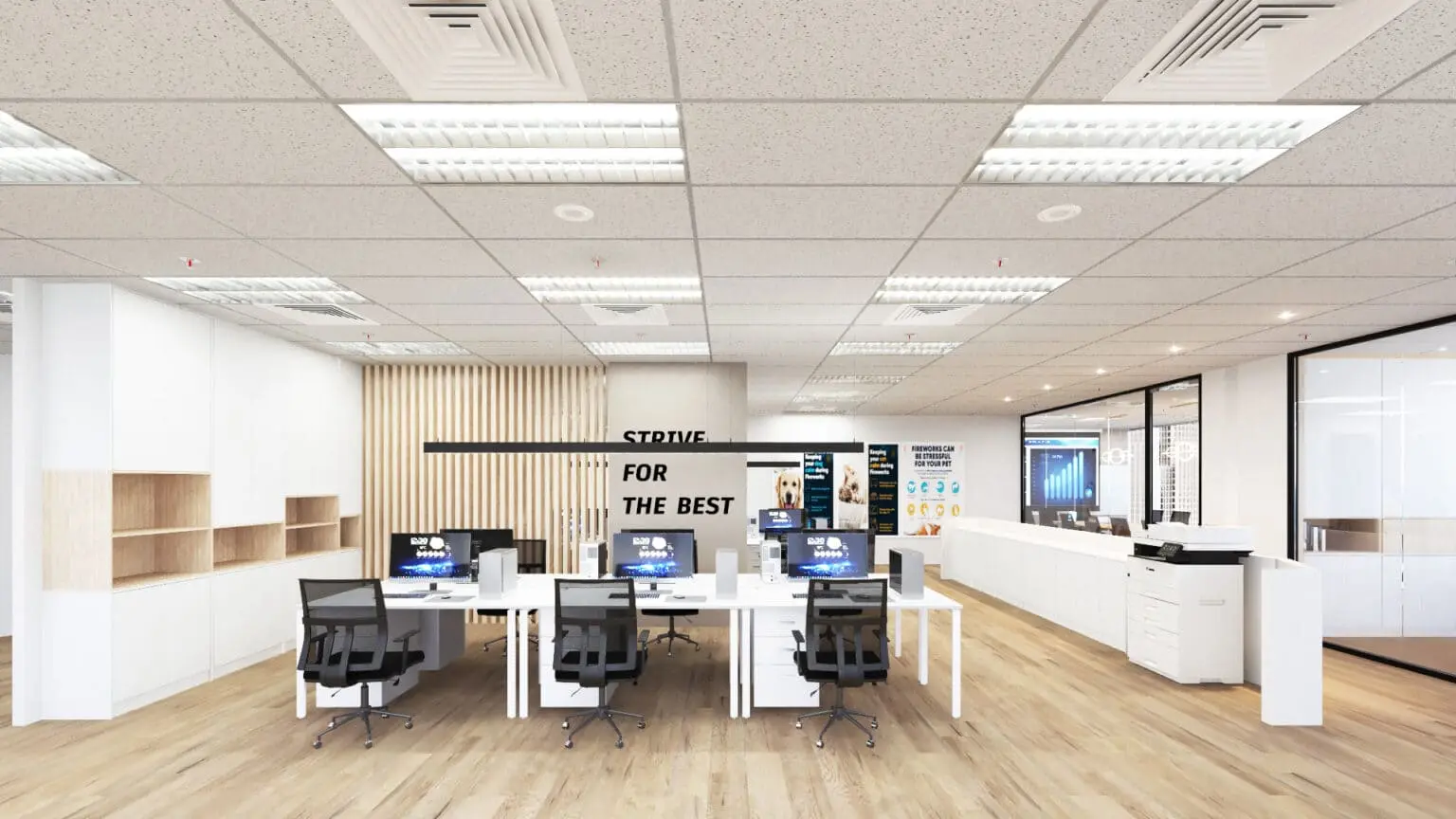
Workplace Interior Design Company
When a business needs its office redone, there are usually three routes on the table: handle it in-house, bring in a freelance designer, or work with a dedicated workplace interior design company. Each can technically get the job done. What differs is who’s accountable when something goes wrong, how much of the process falls on your own team, and how the finished space actually holds up once people are working in it every day.
Here’s how the three compare, and where each one tends to fall short.
Handling It In-House
This usually means someone on the team, often in operations or HR, takes on the renovation alongside their regular job. It can work for very small, low-stakes changes: repainting a wall, swapping out some furniture, rearranging desks.
Where it tends to struggle is scale. Once the project involves construction, electrical work, or anything requiring proper permits and contractor coordination, an in-house lead is managing a second full-time job they weren’t hired to do. Budgets slip because nobody’s watching costs full-time. Timelines slip because renovation isn’t anyone’s actual priority, and it keeps getting pushed behind whatever’s more urgent that week. And without design training, the result often looks like a collection of individually reasonable decisions that don’t add up to a coherent space, since nobody’s holding the whole layout and brand story in their head at once.
Hiring a Freelance Designer
A freelance designer brings design expertise the in-house route usually lacks, and can be a genuinely good fit for smaller, design-focused projects, like refreshing a reception area or reworking a single room.
The gap shows up with construction. Most freelancers create the design and then hand it off to a separate contractor, which means two parties need to be coordinated instead of one. If the finished result doesn’t match the drawings, or if a material choice doesn’t translate well from concept to construction, you’re often stuck mediating between two businesses that each have their own priorities and neither of which is fully accountable for the end result. Timelines can also stretch, since a freelancer juggling multiple clients may not be available to problem-solve on site the moment something needs a decision, and a construction crew waiting on that decision means the whole project sits idle in the meantime.
Working With a Workplace Interior Design Company
A dedicated workplace interior design company, especially one that handles design and build under one roof, folds both of the above into a single accountable team. The same people responsible for the design are also responsible for how it gets built, which removes the handoff point where things tend to go wrong.
This matters most on anything beyond a small cosmetic update: full-floor renovations, fit-outs for a new office, or projects with real construction, electrical, or compliance requirements. A firm doing this as its core business also brings something in-house teams and most freelancers can’t: existing relationships with contractors and suppliers, familiarity with local building requirements, and a track record across multiple projects rather than one-off experience. When something unexpected comes up mid-project, which it usually does, that experience is what turns a potential delay into a same-day fix.
When Each Option Actually Makes Sense
None of these is universally right. A small startup redoing a single meeting room might genuinely be fine handling it in-house, especially if the change is cosmetic and low risk. A company wanting a strong design point of view for a reception area, without touching the rest of the office, might be well served by a freelancer who can focus purely on that one space.
But for anything involving real construction, a layout overhaul, or a project where the business can’t afford delays and miscommunication, a dedicated workplace interior design company tends to be the option that avoids the most friction. The cost of coordinating between multiple parties, or absorbing the learning curve of managing a renovation in-house, often ends up higher than working with a firm built to handle the whole process from the start. It’s worth being honest about the actual scope of the project before deciding, since the right choice usually becomes obvious once that’s clear.
What to Look For if You Go This Route
Not every workplace interior design company operates the same way. A few things worth checking before committing:
- Whether design and construction are handled by the same team, or handed off to a separate contractor once the drawings are done.
- Whether they have a track record you can actually verify, ideally with a past client willing to talk about their experience rather than just polished project photos.
- How they communicate on budget and timeline, and whether they explain what drives cost rather than just quoting a number with no breakdown.
- What happens after handover if something needs adjusting once the space is in use, and whether that’s covered under warranty or billed as a separate job.
Where CTN Interior Comes In
We’ve worked as a design-and-build workplace interior design company across the Klang Valley since 2001, handling space planning, construction, and fit-out under one roof rather than splitting the process across multiple vendors. In practice, that means the person who walks your site and understands what your team actually needs is part of the same team responsible for building it, so nothing gets lost in translation between a design phase and a construction phase.
Over that time we’ve worked across a wide range of office sizes and industries, from smaller teams needing a straightforward layout refresh to larger corporate fit-outs involving multiple departments, executive zones, and phased timelines. What stays consistent regardless of scale is the same single point of contact from the first site visit through to handover, and the same accountability if something needs adjusting once the space is actually in use.
If you’re currently weighing your options for an upcoming office project, we’ve put together some thoughts on what to look for when comparing interior design companies that might help narrow things down.
If you’d rather just talk it through, we’re happy to have that conversation.